
Middle Childhood
Ages 6-12
“If we don’t use all of what we’ve got, we end up with a very different worldview and set of ethics than if we are connected to nature through all our sensory capacities. We become what our experiences provide – that’s our nature.”
Jon Young, Coyote’s Guide to Connecting with Nature

The Elementary-Aged program at Hemlock Hollow offers an immersive forest experience where children aged 6-12 are invited to deepen their relationship with the natural world and with each other. Each day is structured around core routines, or nature connection practices, through which a multitude of opportunities arise for children to practice academic skills.
Structured as a homeschool enrichment program, our daily activities are purposely chosen for their openness to engaging a wide range of skill levels. Our educators are attuned to the varying developmental stages and academic abilities of each child, and work to enhance their experience through individualized attention.
Nature Connection
Our daily rhythm is rooted in the core routines of nature connection, practices encompassed in the Coyote Mentoring approach. Our regular routines include sit spots, storytelling, tracking, animal forms, and thanksgiving, each of which nurture children’s awareness of self, other, and environment. Where appropriate, we invite children to extend their experiences of these routines into deeper lines of inquiry through creative arts, writing projects, science and math experiments, and practical life skills. Core routines also provide ample opportunities to instill mindfulness and expand children’s social-emotional awareness.
Language and Literacy
One of our primary core routines is storytelling, which takes place in various forms and venues throughout each day. A great deal of teaching happens through our story-based curriculum, which centers indigenous stories, myths, and traditions as invitations to learn more deeply about the land and its history. Children are invited to engage in self-expression through their own story development and sharing through regular journaling activities tailored to each child’s specific developmental stage. Each season, children participate in a group book production project, and develop stories borne of their own nature observation experiences and growing knowledge of local natural history.
STEM & Survival Skills
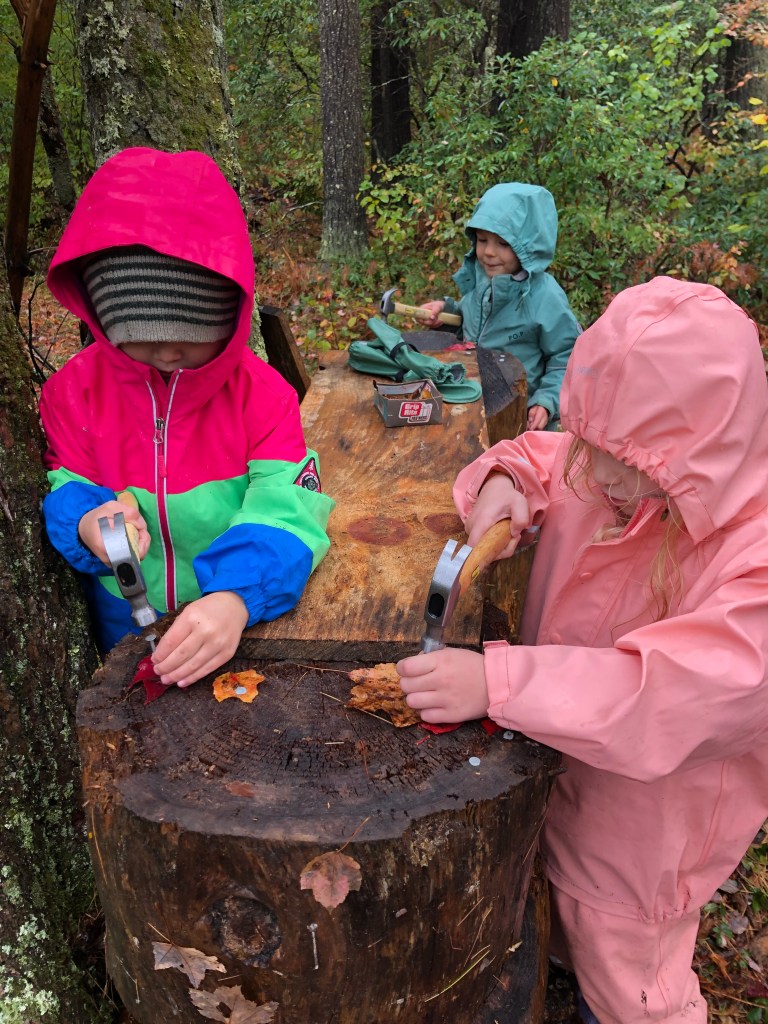
Another primary core routine, sit spots, pairs mindful awareness with inquiry-based observation. Through this regular practice, children deepen their awareness of their surroundings and gain a stronger sense of interconnectedness with their environment. The reactions, insights, and other observations shared after sit spots often lead to fun and fruitful STEM activities such as fire and shelter building, animal tracking, and plant study. Hands-on, active work always precedes “head work” in our program; engagement with practical, wilderness survival skills invites children to utilize the resources offered by the natural environment while integrating their own expanding academic skill sets.
 Hemlock Hollow Homeschool Community